






What is the towing capacity of the 2027 Ram 1500?
The 2027 Ram 1500 has a maximum available towing capacity of 11,530 pounds when properly equipped with the standard-output 3.0-liter Hurricane twin-turbo inline-six engine. That is the model-wide maximum, not the rating for every Ram 1500. The truck’s cab, bed, drivetrain, axle ratio, equipment, passengers, cargo, and trailer setup determine the towing limit of an individual configuration.
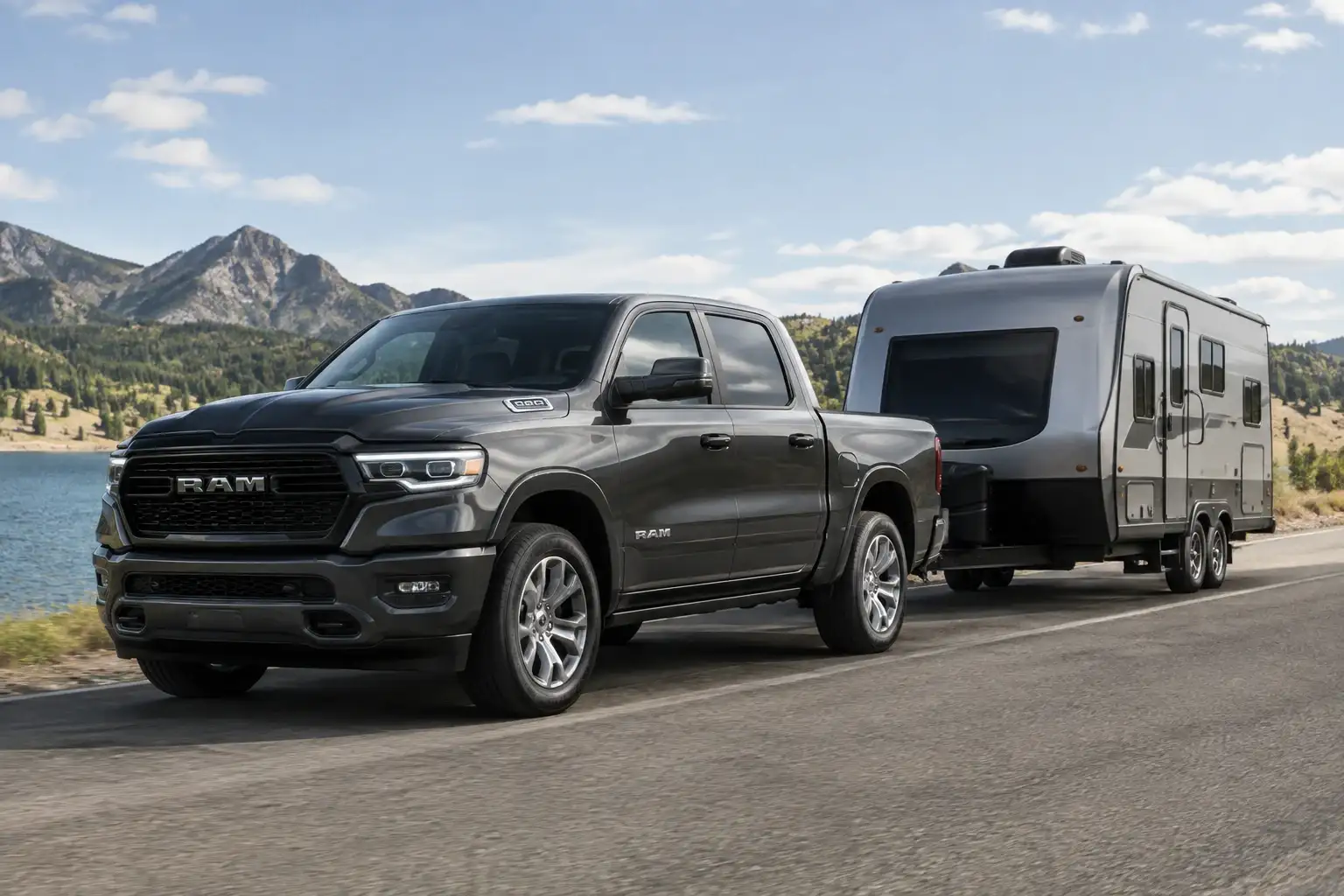
How much can each 2027 Ram 1500 engine tow?
The 2027 Ram 1500 offers several engines, and each engine family has a different published maximum towing capacity. Shoppers should compare these ratings with the weight of the trailer they intend to pull, including everything loaded inside or on it.
- 3.0-liter Hurricane standard-output twin-turbo inline-six: up to 11,530 pounds with 420 horsepower and 469 pound-feet of torque
- 5.7-liter HEMI V8: up to 11,470 pounds with 395 horsepower and 410 pound-feet of torque
- 3.0-liter Hurricane High Output twin-turbo inline-six: up to 9,480 pounds with 540 horsepower and 521 pound-feet of torque
- 3.6-liter Pentastar V6: up to 8,100 pounds with 305 horsepower and 269 pound-feet of torque
These are engine-family maximums rather than universal ratings. Two Ram 1500 trucks with the same engine can have different towing limits because their cab, bed, drivetrain, axle, trim, and equipment differ. The truck’s certification and towing information should govern any real towing decision.
Which 2027 Ram 1500 engine is best for maximum towing?
The standard-output 3.0-liter Hurricane is the engine to consider when maximum towing capacity is the priority. Its 11,530-pound ceiling narrowly exceeds the 5.7-liter HEMI V8’s 11,470-pound maximum.
The Hurricane High Output produces substantially more horsepower and torque, but it does not deliver the highest published towing rating. That distinction illustrates why engine output alone cannot determine towing capacity. A manufacturer calculates the rating for the complete vehicle configuration, accounting for factors such as cooling, chassis setup, suspension, tires, axle loading, and the truck’s own weight.
The 3.6-liter Pentastar V6 has the lowest engine-family maximum at 8,100 pounds, but that capacity can still suit many utility trailers, recreational trailers, and other moderate towing jobs. Trailer type matters less than its actual loaded weight and how that weight is distributed.
Do the RHO, TRX SRT, and Rumble Bee have different ratings?
Specialized 2027 Ram 1500 models have towing capacities that should not be substituted with the broader engine-family figures. Their performance focus and vehicle configurations produce distinct limits:
- Ram 1500 RHO: up to 8,370 pounds
- Ram 1500 TRX SRT: up to 8,100 pounds
- Ram 1500 Rumble Bee: up to 8,890 pounds
For example, the RHO uses the High-Output Hurricane, but its 8,370-pound maximum is lower than the 9,480-pound maximum published for that engine family elsewhere in the Ram 1500 lineup. Shoppers interested in a specialized model should use that model’s specific rating rather than assuming that every truck with the same engine can pull the same amount.
What does “properly equipped” mean for Ram 1500 towing?
“Properly equipped” means the truck must have the complete configuration and equipment required to achieve a stated towing rating. Selecting the correct engine is only one part of that equation. Cab style, bed length, two-wheel drive or four-wheel drive, axle ratio, wheel and tire selection, and towing-related equipment can affect the final number.
Payload is also part of the calculation. Trailer tongue weight presses down on the truck and counts against its available payload along with occupants, cargo, accessories, and hitch equipment. A truck can remain below its trailer-weight limit yet exceed another vehicle rating if too much weight is placed in the cab or bed.
Before towing, compare the intended setup against all applicable figures, including:
- The truck’s configuration-specific maximum trailer weight
- Gross vehicle weight rating
- Gross combined weight rating
- Front and rear gross axle weight ratings
- Available payload
- Receiver, hitch, and ball ratings
- Trailer gross vehicle weight rating
- Tire load limits
How should shoppers calculate the weight of a trailer?
Use the trailer’s loaded weight, not its empty or dry weight. Water, fuel, batteries, propane, camping supplies, tools, equipment, and personal cargo can add significant mass after the trailer leaves the factory.
- Identify the truck’s exact configuration-specific towing and payload limits.
- Estimate or measure the trailer’s fully loaded weight.
- Include hitch hardware and trailer tongue weight in the truck’s payload calculation.
- Add the weight of the driver, passengers, cargo, and installed accessories.
- Confirm that the truck, axles, hitch components, tires, and combined truck-and-trailer setup remain within their individual ratings.
Leaving a reasonable margin below the maximum can also make it easier to account for changing cargo, passengers, or travel supplies. It does not replace compliance with any of the truck’s published limits.
Does horsepower determine towing capacity?
Horsepower contributes to acceleration and the ability to maintain speed, but it does not determine towing capacity by itself. Torque delivery, transmission gearing, axle ratio, cooling capacity, brakes, chassis design, suspension, tires, and vehicle weight all contribute to the final rating.
This is why the 540-horsepower Hurricane High Output does not have the highest towing figure. The 420-horsepower standard-output Hurricane leads the regular 2027 Ram 1500 engine lineup with an 11,530-pound maximum. The strongest towing configuration and the highest-horsepower configuration serve different priorities.
How does towing affect fuel economy?
Towing increases the energy required to accelerate, climb grades, and overcome aerodynamic drag, so real-world fuel economy will be lower than the truck’s unloaded EPA estimate. The size and shape of the trailer, total loaded weight, speed, terrain, wind, temperature, tire pressure, and driving style all affect consumption.
EPA combined fuel-economy estimates also differ by engine, drivetrain, and configuration. Those laboratory-based estimates are useful for comparing similarly equipped trucks, but they do not predict fuel economy while towing. A tall enclosed trailer can create considerably more aerodynamic drag than a lower trailer of similar weight.
Is the Ram 1500 or Ram 2500 the better towing choice?
The 2027 Ram 1500 is the light-duty choice for shoppers whose loaded trailer fits comfortably within the selected truck’s towing, payload, axle, and combined-weight ratings. A heavy-duty truck may be more appropriate when the trailer exceeds those limits, carries substantial tongue weight, or is towed frequently with a heavily loaded cab and bed.
Shoppers evaluating that step up can review the 2027 Ram 2500 towing capacity for a closer look at the heavy-duty alternative.
Where can San Antonio shoppers explore the Ram 1500?
Ancira CJDR in San Antonio is a relevant next step for drivers comparing Ram 1500 configurations for towing, commuting, work, or recreation. Shoppers from San Antonio and the nearby Boerne market can explore Ram 1500 trucks and focus on the engine, drivetrain, cab, bed, and equipment that align with their trailer and passenger needs.
The central number to remember is 11,530 pounds when properly equipped. For an actual truck-and-trailer match, use the rating attached to that specific Ram 1500 configuration and calculate the trailer’s fully loaded weight, tongue weight, passengers, and cargo before towing.